Minister’s mandate

Prime Minister Trudeau published the mandate letters for each of the members of the new Cabinet.

Of particular interest to the telecommunications community is the mandate letter for Navdeep Bains, Canada’s new Minister of Innovation, Science and Economic Development.

The letter includes a telecom specific section:

  • Increase high-speed broadband coverage and work to support competition, choice and availability of services, and foster a strong investment environment for telecommunications services to keep Canada at the leading edge of the digital economy.

There are other sections of interest to my regular readers:

  • Restore the long-form census and update legislation governing Statistics Canada to reinforce the institution’s independence.
  • Improve the quality of publicly available data in Canada. This will require working with Statistics Canada, the President of the Treasury Board and other departments and agencies to develop an Open Data initiative that would consider big data and make more of the data paid for by Canadians available to the public.
  • Develop an Innovation Agenda that includes:
    • expanding effective support for incubators, accelerators, the emerging national network for business innovation and cluster support, and the Industrial Research Assistance Program. These investments will target key growth sectors where Canada has the ability to attract investment or grow export-oriented companies. You will assist the Minister of Finance to ensure tax measures are efficient and encourage innovation, trade and the growth of Canadian businesses; and
    • working with Regional Development Agencies to make strategic investments that build on competitive regional advantages. For those communities that have relied heavily on one sector in the past for economic opportunities, investments that support transition and diversification may be appropriate. Communities that have relied on traditional manufacturing are likely to require specific strategies to support economic growth.

  • Support the Minister of Public Safety and Emergency Preparedness in a review of existing measures to protect Canadians and our critical infrastructure from cyber-threats.

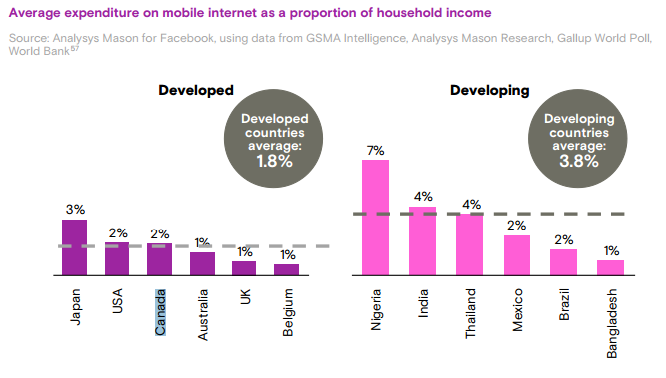
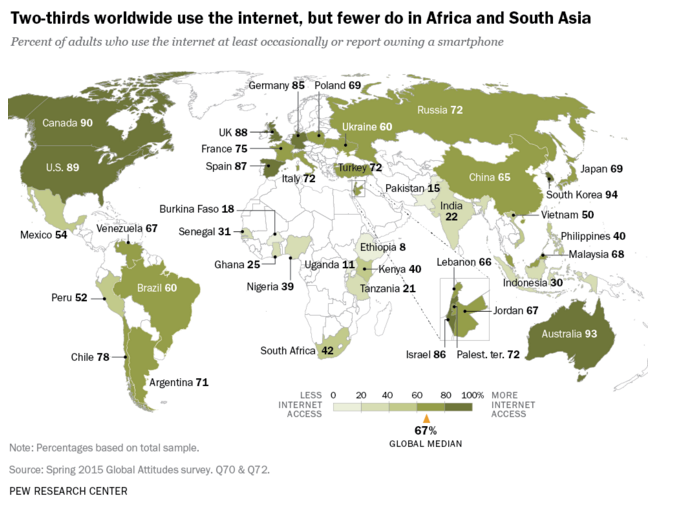
Greg O’Brien observed with disappointment that the mandate letter talks about broadband coverage, without addressing affordability or other factors impacting adoption:

The Prime Minister’s letter continues with “The government’s agenda will be further articulated through Cabinet discussions and in the Speech from the Throne when Parliament opens.”

How does the instruction to “foster a strong investment environment for telecommunications services to keep Canada at the leading edge of the digital economy” apply to the appeals in front of Cabinet and the CRTC that I described last week in “Does CRTC policy inhibit investment?” with its “Wholesale inconsistency“?

We’ll be watching.


Links to other important mandate letters:

  • Minister of Canadian Heritage mandate letter
  • Minister of Infrastructure and Communities mandate letter (which notably does not include broadband as part of the mandate “to rebuild Canada for the 21st Century”
  • Minister of Public Safety and Emergency Preparedness mandate letter (which includes cyber security, but has no discussion of first responder 700 MHz network)
  • Minister of Families, Children and Social Development mandate letter (no discussion of increasing adoption of computers, broadband or digital literacy for low income households)

The value of face time

I believe in the power of face time. I’m not talking about the Apple iOS app.

I’m talking about actual face-to-face, in-the-flesh, non-virtual, handshaking, air-kissing, back-slapping, five-sensory (ok maybe not taste) meeting people.

A phone call or a video-Skype or Facetime session is a poor second choice to actually sitting across from a colleague, client, supplier or competitor and having a chance to engage in a conversation, whether it is a formal presentation or casual interaction.

The global nature of our lives means that we frequently need to settle for digital conversations and meetings. Just having to cross town in traffic can cost more than 2 hours of time in order to meet in person – and many of us fill that commuting time by being on the phone having digital meetings on the way to non-virtual meetings. Let’s face it – it is a lot easier to have digital conversations with people who you have met in reality.

So for the next few days, I am looking forward to hanging out at the ISP Summit in downtown Toronto.

As a conference organizer [The Canadian Telecom Summit, June 6-8, 2016, Toronto] of course you might expect me to believe in the value of people attending conferences. One of the biggest benefits is that I don’t even know all the people that I might want to speak with – part of the value is just being there and taking it all in. One good contact, one new insight can make it all worthwhile.

I hope to see you over the next couple days at the ISP Summit. But if you can’t make it, plan on joining us at The Canadian Telecom Summit in June. Registration is already open.

Momentum for digital inclusion

Yesterday, I wrote about “Digital disparities“, looking at a recent study that examined how household income impacts access to digital media and technology.

For years now, I have been writing and speaking about the need for Canada to turn its attention to addressing the need to get connected computers into low income households with school aged children. About 5 years ago, I estimated that we needed one million computers in order to address what the FCC is calling a “homework gap”.

Canada’s digital divide is primarily a problem with adoption, not supply. There are far too many people, primarily in our lowest income quintiles, who can’t afford a computer, let alone broadband service, despite living in Canada’s biggest urban centres.

I am encouraged to see that digital economy issues will fall under Canada’s new Minister of Innovation, Science and Economic Development, Navdeep Bains. And, Prime Minister Justin Trudeau is also taking responsibility for Youth.

And we have a Cabinet Committee that may find such a program to be interesting: Cabinet Committee on Inclusive Growth, Opportunities and Innovation, with responsibilities to “consider strategies designed to promote inclusive economic growth, opportunity, employment and social security, including sectoral strategies and initiatives. Responsible for initiatives that will strengthen and grow the middle class.”

Cabinet Committee on Inclusive Growth, Opportunities and Innovation
Chair: The Hon. Jane Philpott [Health]
Vice-Chair: The Hon. Jean-Yves Duclos [Families, Children and Social Development]

Members/Membres

  • The Hon. Lawrence MacAulay [Agriculture and Agri-Food]
  • The Hon. Carolyn Bennett [Indigenous and Northern Affairs]
  • The Hon. Scott Brison [Treasury Board]
  • The Hon. Dominic LeBlanc [Government House Leader]
  • The Hon. Navdeep Singh Bains [Innovation, Science and Economic Development]
  • The Hon. William Francis Morneau [Finance]
  • The Hon. Chrystia Freeland [International Trade]
  • The Hon. James Gordon Carr [Natural Resources]
  • The Hon. Diane Lebouthillier [National Revenue]
  • The Hon. Catherine McKenna [Environment and Climate Change]
  • The Hon. MaryAnn Mihychuk [Employment Workforce Development and Labour]
  • The Hon. Amarjeet Sohi [Infrastructure and Communities]
  • The Hon. Bardish Chagger [Small Business and Tourism]

Getting computers and connectivity into every household with school aged children is an achievable initiative that is certain to help provide life-changing opportunities to economically disadvantaged Canadians.

It is a project that should resonate with the Committee on Inclusive Growth, Opportunities and Innovation.

Kids do homework at home. In the year 2015, that means kids need home computers with internet access.

Digital disparities

The New York Times reported on a study by Common Sense Media [executive summary – pdf, full report – pdf], a large-scale study exploring young people’s use of a range of media and technology.

The research is called a ‘Media Use Census’ with a rich array of information about the media habits and preferences of Americans, aged 8 to 18 years old.

I found interest in the some of the same information that caught the attention of the NY Times. How does household income impact access to digital media and technology?

Teenagers in lower-income households have fewer desktop, laptop and tablet computers to use at home than their higher-income peers, according to a new study. And those disparities may influence more than how teenagers socialize, entertain themselves and apply for college or jobs.

According to the report, a fifth of teenagers in American lower-income households said they used computers less than once per month for homework – or not at all.

Computers in schools don’t help kids do their homework. Homework is done at home and today, that means that kids need access to a connected home computer to have a chance in school.

The author of the Common Sense Media report, Vicky Rideout, is quoted by the Times saying, “There’s a really big difference between trying to type an essay for school — or do research on the Internet — on a smartphone or using a computer.”

Is Canada gathering sufficient information to understand its own digital disparities? How many Canadian kids suffer from a digital homework gap?

The Trudeau government gets sworn in today. Dealing with the income based digital divide ranks high on my wish list for action.

Paper artifacts of political pandering

I was glancing through Canada’s Broadcast Act and Telecom Act last night – clearly a sign that I lost interest in the Monday Night Football broadcast – and I came across two sections that bear witness to the failures in digital economy leadership by the last government.

Enshrined in legislation in both Acts is a section prohibiting charging a fee for paper bills. From the Broadcast Act:

34.1 No person who carries on a broadcasting undertaking shall charge a subscriber for providing the subscriber with a paper bill.

And the Telecom Act:

27.2 Any person who provides telecommunications services shall not charge a subscriber for providing the subscriber with a paper bill.

I am certain a legal scholar can weigh in on why the two sections are phrased differently. Both sections were enacted at the same time. Why does the Broadcast Act say “No person… shall charge” while the Telecom Act says “Any person… shall not charge”?

This is the stuff of Talmudic debates.

A much more fundamental question is how such clauses could become part of the legislation that governs the provision of communications services in the year 2015. These are sections that were added in 2014, buried in a budget appropriations act, Bill C-39, that was slammed through Parliament, one of many omnibus bills that characterized the last Parliament.

Where was the discussion about the economic impact of such a bill? Any debate on the signals being sent by such legislation? Evidence heard about the adoption rates of electronic billing when there is a fee differential, versus no fee differential? So many more questions that weren’t considered. This legislation wasn’t required to protect disadvantaged groups; in a meeting with the CRTC, the carriers had offered exemptions from charges to every imaginable group, as I described last year.

The paper bill sections of the Telecom Act and Broadcast Act are testaments to the failures in digital economy leadership of the last government.

Tomorrow, November 4, will see the arrival of a new Cabinet, with new leadership for the development of policy to guide the information and communications sectors.

It is time for a fresh start for fact-based policy making. That would be a real change.

Scroll to Top